From Patina to Pitting: Selecting Door Furniture That Ages Well in British Weather
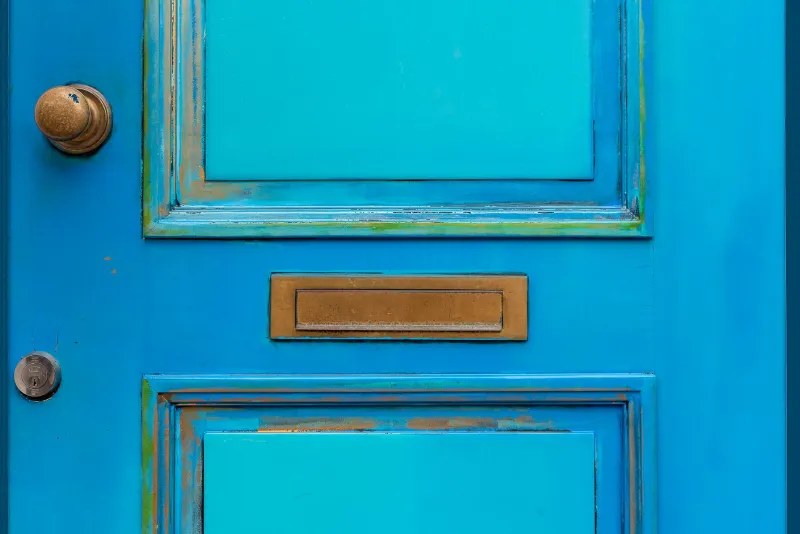
A front door is usually judged on its colour, its panels and the quality of its joinery. The parts that a hand actually touches — the lever, the knocker, the letterplate, the hinges and the cylinder escutcheon — are decided later, often in a hurry and frequently on the basis of a photograph. That ordering of priorities is understandable, but it is the wrong way round for a component that will spend its life on the most weather-beaten face of the building.
In Britain, external door furniture is asked to endure a particular combination of pressures: frequent wetting and drying, high ambient humidity, chloride from coastal wind, traffic-derived pollution in towns and cities, and a domestic cleaning regime that sometimes does more harm than the rain. Understanding how a finish is constructed, and where it is likely to break down, is a more reliable basis for selection than a showroom display.
The finish is a system, not a colour
Every visible surface on door hardware is a layered arrangement: a base metal, a preparatory treatment, and a coating or plated layer. Failures almost always begin at the interfaces — a screw hole, a machined edge, the underside of a letterplate flap, or the recess behind a rose. Once water sits in these places, the coating is asked to do something it was never designed to do, and the base metal beneath becomes the deciding factor in how long the item lasts and how gracefully it degrades.
Comparing the common options
Polished and lacquered brass
Brass is the traditional choice and remains well suited to period property. Lacquered brass arrives looking immaculate but depends entirely on an intact clear coat. Ultraviolet light, abrasive cleaners and the small scratches of daily use gradually breach that layer, after which the brass beneath tarnishes unevenly and the lacquer begins to flake. Unlacquered brass is the more honest proposition: it will mellow into a patina, it can be revived with a non-abrasive polish when the owner wishes, and it never fails in the dramatic sense. The trade-off is that it demands periodic attention.
Chrome and nickel plating
Chrome is typically applied over brass or a zinc alloy. Where the substrate is a zinc alloy, the plating is only as good as its thickness and integrity; once moisture reaches the alloy, it corrodes sacrificially and the chrome blisters into the familiar pitting seen on older coastal properties. Chrome over solid brass performs considerably better. Nickel finishes behave similarly and are marginally softer.
PVD coatings
Physical vapour deposition produces a very hard, thin film over stainless steel or brass. It offers good abrasion resistance, strong colour consistency across a matched range of handles, letterplates and numbers, and markedly better resistance to tarnishing than lacquer. Performance still depends on the substrate and on the quality of the deposition, so the specification matters more than the marketing term.
Black powder coat
Electrostatic powder coating gives excellent colour depth and is the natural partner to a contemporary or heritage-style door in a dark shade. Coating thickness is greatest on flat faces and thinnest at edges, screw fixings and cut apertures — precisely the places water reaches. Modern polyester powders hold colour far better than older formulations, but a chip that exposes steel will rust unless it is touched in promptly.
Stainless steel and galvanised steel
Stainless steel is available in several grades; the 316 grade, which contains molybdenum, is the sensible choice within reach of the sea or in heavy industrial atmospheres, while 304 is adequate inland. Galvanised and mild steel items rely on a painted topcoat and should be treated as maintenance items rather than permanent fixtures.
Where these components actually fail
The pattern of failure is remarkably consistent. Water tracks behind the handle rose and sits in the recess, quietly corroding the fixing screws. Letterplate springs weaken, flaps fail to seat flush, and the resulting gap admits both rain and draught. Hinge knuckles seize or their washers perish, and the door begins to drop. Decorative numbers and knockers fixed with stainless screws into an aluminium backing plate create a small galvanic cell; a film of rainwater is sufficient electrolyte, and the aluminium around the fixing is eaten away within a few seasons. Cylinders corrode at the keyway, and escutcheons that are not properly sealed let water into the lock case.
Reading the specification
Ask what the base metal is, not merely what the finish is called. Corrosion resistance is graded under BS EN 1670, with the higher classes appropriate to exposed external positions. Handles intended for a certified doorset will carry a BS EN 1906 classification, and hardware on a Secured by Design or PAS 24 installation is subject to additional requirements that are worth preserving when replacing individual items — fitting a decorative handle in place of a tested one can undermine the certification of the whole door. Finally, read the warranty wording closely: many guarantees exclude coastal exposure, and some exclude cleaning products altogether.
Matching finish to building and temperament
For Victorian and Edwardian houses, black antique iron or unlacquered brass reads correctly and improves with age. Inter-war homes take chrome or nickel plating comfortably. Contemporary schemes are well served by PVD, matt black powder coat or brushed stainless steel. Within a hundred metres of the coast, 316 stainless steel or a quality PVD finish is the prudent route regardless of style, and owners with little appetite for upkeep should choose accordingly rather than resolving to polish more often than they will.
Consistency matters as much as individual choice. A door with a brass knocker, a chrome letterplate and a black lever looks accidental. Select a single family of hardware — handle, knocker, numbers, bell push, letterplate — and let the finish be repeated.
A cleaning routine that does no harm
Wash external hardware quarterly with warm water and a pH-neutral soap, using a soft cloth, and dry it afterwards rather than leaving water to pool in recesses. Avoid bleach-based products, acidic descalers and abrasive creams, all of which attack lacquer, PVD and powder coat alike. Brass that is lacquered should never be polished with an abrasive; unlacquered brass benefits from an occasional non-abrasive polish. Apply a dry PTFE or silicone lubricant to hinges and lock mechanisms annually rather than a wet oil that will collect grit. Inspect fixings each autumn, replace perished gaskets, and touch in any chip to a powder-coated surface with matching enamel before rust establishes itself.
Door furniture is a small purchase that determines how a door feels, sounds and looks for a decade or more. Choosing it by finish chemistry rather than by photograph is a modest change of habit with a disproportionately long return.