The Brass Fulcrum: Specifying Euro Profile Cylinders for British Doors
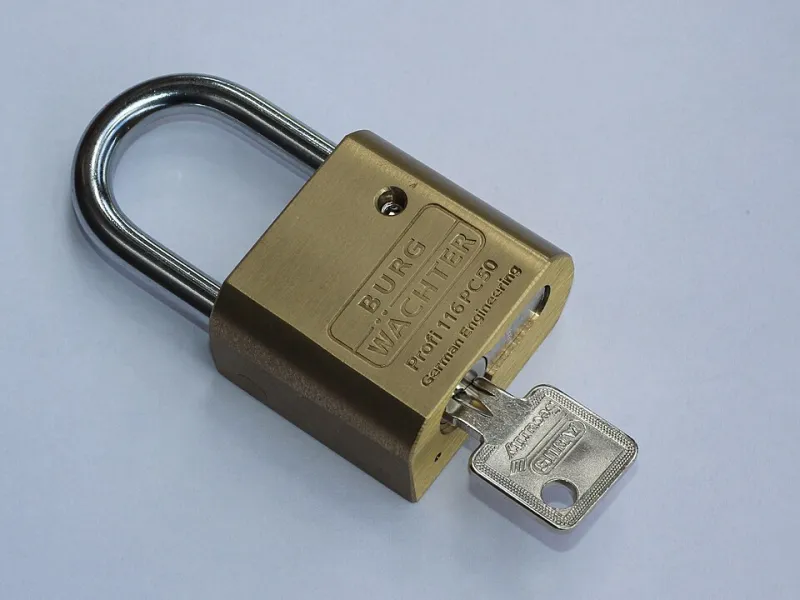
Photo: MichaelFrey, CC BY-SA 3.0, via Wikimedia Commons
A front door is usually judged by its slab, its colour and its furniture. Yet the component that most often decides whether an intruder gains entry is a small brass barrel no longer than a finger: the Euro profile cylinder. It is also the part most easily changed without removing the door, altering the frame or disturbing the surrounding brickwork. For homeowners and premises managers alike, understanding this component is a disproportionately useful exercise.
What the cylinder actually does
A Euro profile cylinder sits within a lock case and is turned by the handle or key. On a typical British front door it works with a multipoint lock, a night latch or a mortice lock, and it performs two distinct tasks: it transmits turning force to the locking mechanism, and it presents the keyway that resists unauthorised entry. Those two roles explain why cylinder failures are so consequential. A cylinder that snaps cleanly leaves the lock mechanism accessible; a cylinder that can be bumped or picked offers no meaningful barrier at all.
Modern cylinders address these risks in different ways. Anti-snap designs incorporate a sacrificial section that breaks at a defined point, leaving a short stub outside the door rather than a usable length of barrel. Anti-bump features use hardened pins and altered pin geometry to disrupt the rapid impact technique. Anti-pick and anti-drill measures are separate again. A cylinder may be strong in one respect and ordinary in another, which is why ratings matter more than marketing language.
Reading the ratings: TS007, EN 1303 and insurance
In the UK, the most familiar benchmark is TS007, the industry specification for cylinder and handle security. Its star system is cumulative: a three-star cylinder is assessed as a complete unit, while a two-star cylinder paired with a one-star security handle also achieves the three-star overall standard. The distinction matters when replacing only the barrel. Fitting a high-rated cylinder behind a handle with no security rating may not satisfy an insurer that has specified a three-star overall solution.
BS EN 1303 is the underlying European product standard, grading cylinders for key security, attack resistance, durability and fire resistance. A cylinder carrying a recognised Kitemark and a documented TS007 rating is generally easier to evidence to an insurer than one described only as “high security”. It is worth checking the policy wording before purchase. Some insurers name TS007 three-star explicitly; others refer to Secured by Design or to a specific certification body. Matching the cylinder to the stated requirement avoids an awkward conversation after a claim.
Fire doors introduce a further constraint. A replacement cylinder on a flat entrance or commercial fire door should not compromise the door’s certified performance, and the hardware should be compatible with the existing intumescent protection. This is one area where substitution on price alone is rarely sensible.
Measuring before ordering
Euro cylinders are not universal. Three dimensions determine the correct replacement: the overall length, the split between the internal and external sides of the cam, and the backset. The backset is the distance from the door edge or face — conventions vary between manufacturers — to the centre line of the cylinder, commonly 45 mm or 55 mm on domestic doors. The overall length is measured across the barrel, while the split describes how much of that length sits inside and outside the door.
Measurement should be taken with the existing cylinder removed, not estimated from the door thickness. Furniture thickness, escutcheons and the position of the lock case all affect the correct figure. A cylinder that is too short will not engage the cam properly; one that is too long will protrude beyond the door face where it can be gripped and attacked. The retaining screw hole must also align, since offset positions differ between models.
Matching furniture, keeps and the door itself
A new cylinder must suit the handle and escutcheon already fitted. Some security handles incorporate a cylinder guard that only accepts a particular profile; others rely on a separate hardened plate. The cam shape must match the lock case, and the keyway should be orientated so that the key inserts comfortably rather than upside down. On multipoint locks, the cylinder also has to travel the correct distance to throw the mechanism fully, which is not always achieved by a barrel of nominally similar dimensions.
Style deserves a moment’s thought as well. A polished brass cylinder in a satin nickel suite looks like an afterthought, and a bulbous thumbturn can spoil the line of a period door. Where a thumbturn is preferred for escape or convenience, confirm that it is permitted on the door in question and that it does not weaken the security specification.
Where installations go wrong
The most common error is over-tightening the retaining screw, which distorts the cylinder body and causes the key to bind. A second is leaving the barrel proud of the door face, defeating the purpose of an anti-snap design. A third is fitting a three-star cylinder to a door whose handles, keeps or lock case remain vulnerable, creating a false sense of completeness. Finally, there is the matter of keys: a restricted or registered keyway offers better protection against copying, but only if the household or business keeps proper control of the registration card.
Commercial doors: key control and access
On commercial premises, the cylinder is also an administrative component. Master-key suites, keyed-alike arrangements and restricted profiles allow facilities teams to control access without changing hardware. It is sensible to record cylinder lengths, cam types and keyway references before specifying replacements, so that future maintenance does not depend on a single contractor’s memory. Where access control or audit trails are required, the cylinder may need to integrate with an electromechanical system rather than simply replace a mechanical barrel.
When this is a door specialist’s job
Replacing a Euro cylinder is often a straightforward task, but not always. A cylinder that will not seat correctly, a door that has dropped, a damaged multipoint lock, a fire door with certification requirements or a heritage door with non-standard furniture all point towards a specialist assessment rather than a general locksmith visit. The cylinder is small, but it sits at the centre of the door’s security and weather performance. Getting it right is less about buying the most expensive barrel and more about matching the correct specification to the door, the furniture and the insurer’s requirements.