Upper Leaf, Lower Leaf: A Practical Appraisal of Stable Doors for UK Entrances
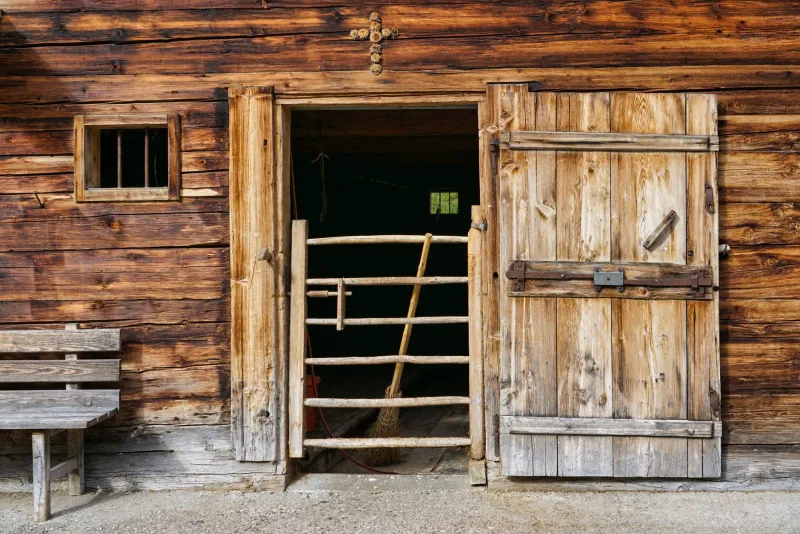
Stable doors carry a strong pastoral association, yet the split leaf is a mechanical arrangement before it is a stylistic one. For British homes, the appeal is understandable: the lower leaf can remain closed while the upper leaf opens to admit air, light and conversation. The difficulty is that this convenience sits alongside two independent leaves, a meeting rail and a set of hardware that must withstand wind-driven rain, attempted intrusion and daily use. A stable door is therefore not simply a cottage door with a horizontal cut through it. It is a doorset whose security and weather performance depend on how the two leaves, the frame and the ironmongery are designed to work together.
Where the type earns its place
Stable doors are most convincing where there is a genuine reason for controlling the opening. Period cottages, farmhouses and older rear entrances often suit the pattern, particularly where the door opens onto a garden, yard or paddock. In these settings the stable door can provide useful ventilation without allowing a dog or a small child to pass through, and it can retain a visual relationship with the outside while the lower leaf remains shut.
Modern properties can also use the type successfully, but context matters. A stable door at a rear garden room, utility entrance or outbuilding can feel purposeful; the same door at the principal entrance of a contemporary townhouse may appear applied rather than integrated. In conservation areas and listed buildings, the question is not only one of taste. Planning consent, listed building consent and the character of the elevation may all influence what is acceptable. A stable door is not automatically appropriate simply because a property is old.
The security question: two leaves, one locking strategy
The central security concern is that the upper leaf can be opened independently. If that leaf is secured only by a light latch or a pair of surface bolts, it becomes the weaker half of the entrance. A sound specification treats both leaves as part of the security envelope. The lower leaf should carry the principal locking mechanism, while the upper leaf should have its own locking or bolting arrangement that engages with the frame and, where appropriate, with the lower leaf.
Hinges deserve equal attention. The lower leaf is heavy and is often the leaf that receives the most use, so three or four heavy-duty hinges are preferable to two lighter ones. Security hinge bolts can help resist forcing at the hinge side. The frame should be suitably reinforced, and the meeting rail between the leaves should not rely on a soft timber rebate alone. Where insurance is a consideration, it is sensible to check whether the insurer expects a doorset certified to a recognised standard such as PAS 24, or a lock meeting BS 3621. A stable door can meet robust security expectations, but only when the hardware and frame are specified as a complete system.
Weather: rain, draughts and the meeting rail
The horizontal joint between the leaves is the most exposed detail. Wind-driven rain can be pushed against the meeting rail, and a poorly sealed joint will admit both water and draughts. A well-made stable door should incorporate a proper weather seal, an astragal or cover strip where appropriate, and a drainage path that directs water away from the internal face. The threshold must also be considered. A low threshold may improve access, but it can reduce weather resistance unless it is paired with a suitable seal and drainage detail.
Ventilation is one of the type's attractions, but it is not free. An open upper leaf admits rain when the wind is in the wrong direction, and in exposed locations the opening may be limited to brief periods or protected by a porch or canopy. The door should be specified with compression seals and adjustable keeps so that the leaves can be brought back into close contact as the seasons change. Thermal performance is similarly dependent on the whole assembly, not just the thickness of the leaf.
Hinges, thresholds and the mechanics of half-open use
Everyday use reveals whether a stable door has been well specified. The lower leaf may be used constantly while the upper leaf remains closed, or the upper leaf may be opened for parcels, pets and conversation. A door restrictor or chain can prevent the upper leaf from swinging too far in gusty conditions. If the door is used by children or vulnerable residents, the risk of the upper leaf closing unexpectedly should be considered.
Stable doors are not normally suitable where a certified fire door is required. Flat entrances, shared corridors and certain commercial situations demand a fire-rated doorset with tested hardware, and a conventional stable door should not be assumed to satisfy that requirement. For ordinary domestic entrances, the practical test is whether the split leaf supports the way the household actually uses the door, rather than whether it looks charming in a brochure.
Materials and maintenance realities
Timber remains the natural choice for many period settings, but timber stable doors need disciplined maintenance. The meeting rail, bottom edge and threshold are vulnerable to moisture, and paint or stain systems must be kept in good repair. Composite, aluminium and uPVC stable doors can reduce maintenance, but their detailing varies considerably. The visual charm of a stable door depends on proportions, mouldings and hardware; a poorly resolved modern version can look like a standard door with an unnecessary split.
A specification checklist
Before ordering, confirm that both leaves have a defined locking strategy, that the frame is reinforced, and that the meeting rail includes a weather seal and drainage detail. Check the threshold against access needs and weather exposure. Ask how the upper leaf is restrained when open. Confirm the maintenance regime for the chosen material. Finally, consider the insurer's requirements and any planning or conservation constraints.
A stable door can be a practical and characterful entrance in the right setting. It succeeds when the split leaf is treated as an engineered junction rather than a decorative gesture. K Door Services would advise assessing security, shelter and daily use together before committing to the pattern.